
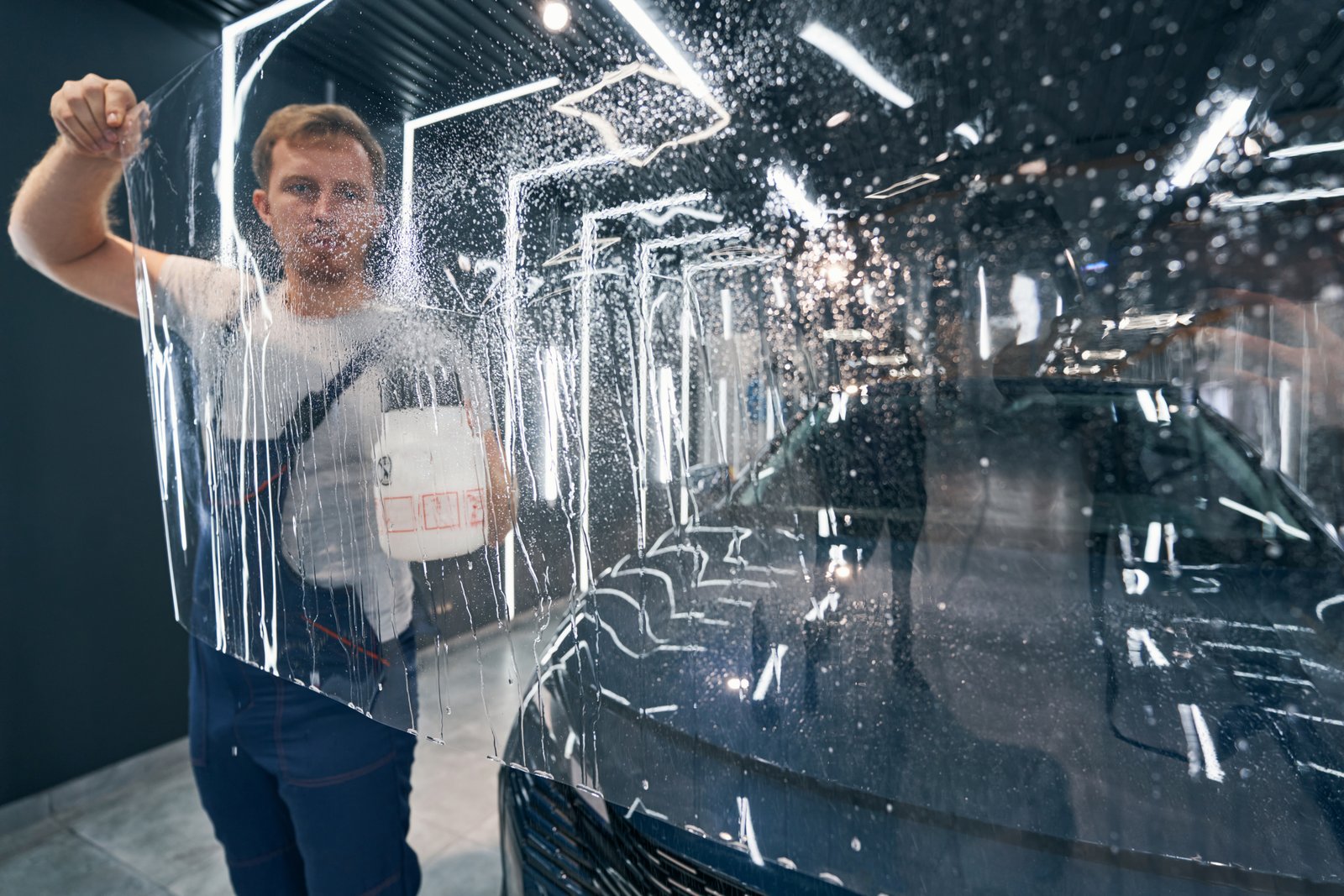
Professional Paint Protection Film Installation & Complete PPF Guide
Your car leaves the dealership flawless, but within months it can develop rock chips, swirl marks, and fading due to real-world driving conditions. Road debris, UV rays, acidic contaminants, bird droppings, and parking lot damage gradually wear down the finish despite regular waxing. Tony’s Auto Salon New Orleans Windeaux & Wrap offers professional Paint Protection Film (PPF) installation, creating a nearly invisible, self-healing barrier that shields your vehicle from chips, scratches, and environmental harm, keeping it in showroom condition. Originally developed for military use, PPF is now the industry standard for automotive protection. This guide explains how it works, installation, maintenance, cost, and comparisons with ceramic coating.
How Paint Protection Film Works to Protect Your Vehicle’s Paint
Paint protection film is a multi-layer clear film, typically between 6 and 10 mils thick, engineered to absorb and dissipate the energy from physical impacts and chemical exposure before it reaches your vehicle’s clear coat and base coat beneath.
Modern Paint Protection Film consists of several engineered layers that work together to safeguard your vehicle’s paint.
Clear coat layer — The outermost surface, which contains the self-healing polymers responsible for repairing minor scratches and swirl marks when exposed to heat.
Polyurethane core — The primary impact-absorption layer. This is what absorbs the kinetic energy of rock chips, gravel strikes, and minor abrasions. Its elasticity allows it to flex on impact rather than crack or puncture.
Adhesive layer — A pressure-sensitive adhesive that bonds the film to the vehicle’s paint surface without damaging the clear coat beneath. Quality adhesive systems leave no residue and do not bond permanently to the paint, meaning the film can be removed cleanly if needed.
Release liner — A protective backing removed during installation that keeps the adhesive layer clean and uncontaminated before application.
Paint Protection Film Benefits: A Complete Breakdown
1. Rock Chip and Impact Protection
The most immediate and measurable benefit of car paint protection film in New Orleans, LA is protection against rock chips and road debris impact. At highway speeds, small stones and gravel thrown up by other vehicles strike your hood, bumper, and fenders with enough force to chip through the clear coat and expose bare metal or primer. Every chip can become a starting point for rust and also creates an unsightly defect that can be costly to fix properly.
PPF’s polyurethane core is specifically engineered to absorb this impact energy. The film deforms slightly on contact, dissipates the kinetic energy across a wider surface area, and returns to its original shape, leaving the paint beneath undamaged. For vehicles driven frequently on Louisiana highways, gravel roads, or behind heavy trucks, this protection is not optional; it is essential.
2. Self-Healing Technology
One of the most significant advancements in modern automotive protection is the self-healing technology built into premium Paint Protection Film (PPF) products. The clear coat layer of quality films contains elastomeric polymers that have shape memory properties, meaning they return to their original flat, unscratched surface when heat is applied.
In practice, this means that minor scratches and swirl marks inflicted on the film surface from light contact, car wash brushes, or fingernail scratches disappear when the vehicle sits in the sun or is rinsed with warm water. When exposed to heat, the polymers soften and naturally repair light surface scratches, returning the film to its original appearance. The self-healing feature continuously activates over the film’s lifespan, helping the surface stay flawless without requiring any effort from the owner.
It is important to understand that self-healing applies to the film surface, not to damage that penetrates through to the paint. Significant impacts that cut through the film still protect the paint beneath; the film absorbs the damage so the paint does not, but the film itself may need spot replacement in those areas.
3. UV Ray Protection and Fade Prevention
New Orleans receives intense solar radiation year-round, and Louisiana’s subtropical climate means vehicles are exposed to high UV levels for most of the year. Prolonged UV exposure causes two types of damage to automotive paint: oxidation, which breaks down the molecular structure of the clear coat, leaving the paint looking dull and chalky; and photodegradation of the pigments in the base coat, which causes colors to fade and lose their original depth and vibrancy.
Premium car exterior protection in New Orleans, LA through PPF includes UV-blocking agents within the film itself that absorb and filter UV radiation before it reaches the paint surface. This is particularly valuable for darker paint colors, such as black, deep blue, and dark red, which are most susceptible to UV-induced fading and tend to show oxidation most visibly.
4. Chemical and Contaminant Resistance
Automotive paint protection through PPF creates a chemically resistant, nonporous surface that prevents acidic and corrosive contaminants from reaching the paint. The substances that cause chemical damage to unprotected paint include:
Bird droppings — Highly acidic and enzymatically active. Left on unprotected paint for even a few hours in hot weather, bird droppings can etch through the clear coat permanently.
Tree sap — Contains acids and resins that bond to clear coat surfaces and cause permanent staining if not removed quickly.
Acid rain — Particularly relevant in urban environments and industrial areas. Acidic precipitation deposits sulfur dioxide and nitrogen oxide compounds that etch paint microscopically with repeated exposure.
Bug splatter — Insect remains are acidic and can etch paint surfaces, particularly on the leading edges of hoods, bumpers, and mirrors where impact is greatest at highway speeds.
Road tar and asphalt — Bonds aggressively to clear coat and requires harsh chemical solvents to remove from unprotected paint, often leaving minor marring in the process.
PPF’s nonporous surface prevents all of these contaminants from reaching the paint. Residue sits on top of the film surface and can be removed safely during routine washing without chemical etching or permanent staining.
5. Hydrophobic Properties
Modern paint protection wrap formulations include hydrophobic top coat layers that cause water to bead aggressively and sheet off the film surface rather than sitting and drying in place. This hydrophobic property delivers several practical benefits:
Water spots caused by mineral deposits left behind when water evaporates on a surface are significantly reduced because water does not sit long enough to dry and deposit minerals. Mud, road grime, and contamination do not adhere as readily to the film surface, meaning the vehicle stays cleaner between washes and requires less effort to clean when washing is needed. Rain while driving provides a degree of natural cleaning action as water sheets across the film surface rather than clinging to it.
6. Salt Corrosion Protection
For New Orleans vehicle owners, salt is a year-round concern, not from winter road treatments as in northern states, but from the Gulf Coast marine environment. Salt air carries sodium chloride particles that deposit on vehicle surfaces, particularly in undercarriage areas, wheel wells, and lower body panels. Salt is one of the most aggressive accelerators of automotive corrosion, penetrating micro-cracks in paint and clear coat to attack bare metal beneath.
An invisible car bra of quality PPF creates an impermeable barrier against salt deposition on all covered surfaces. This protection is particularly valuable on lower front bumpers, rocker panels, and the leading edge of the hood areas where salt-laden air impact is greatest during normal driving.
7. Swirl Mark and Light Scratch Resistance
Swirl marks the fine circular scratches visible in paint under direct light are among the most common and frustrating forms of paint damage. They accumulate from improper washing technique, automatic car washes with abrasive brushes, drying with low-quality towels, and light contact from clothing and debris in parking situations.
The tough outer layer of automotive paint protection film resists the fine abrasions that cause swirl marks, and the self-healing clear coat repairs the minor marks that do occur. Owners who invest in PPF frequently report that their paint looks swirl-free and glossy years after installation, even with regular use and washing a result that would be difficult to achieve on unprotected paint without regular professional polishing.
8. Parking Damage Protection
PPF durability extends to protection against the minor scuffs, scrapes, and contact damage that occur in everyday parking situations. Door edge contact from adjacent vehicles, shopping cart grazes, and tight parking maneuvers that bring the bumper close to objects all represent real-world risks to unprotected paint. While PPF is not a guarantee against all parking damage, it provides meaningful resistance against the light-contact scenarios that cause the majority of parking lot paint damage on a day-to-day basis.
9. Gloss Enhancement and Paint Depth
High-quality PPF does not dull or obscure the paint beneath it enhances it. The optically clear film adds a layer of depth to the paint surface, intensifying color richness and gloss in a way that is particularly noticeable on metallic and pearlescent finishes. Many owners report that their paint looks better after PPF installation than it did before, particularly if the film was installed after a professional paint correction that removed existing swirls and scratches from the base paint.
PPF Installation Process in New Orleans, LA: What to Expect
Understanding the PPF installation process in New Orleans, LA helps you evaluate the quality of a contractor and know what a professional job looks like from start to finish.
Step 1: Vehicle Inspection and Paint Correction
Before any film is cut or applied, the vehicle is inspected thoroughly under controlled lighting. Any existing paint defects, swirl marks, scratches, water spots, or contamination must be addressed through paint correction before PPF installation. Applying film over existing defects seals them beneath the film permanently. A reputable installer never skips this step.
Step 2: Vehicle Decontamination and Cleaning
The vehicle is washed, clay-barred, and chemically decontaminated to remove all surface contamination. Any bonded contamination left on the paint surface will be trapped beneath the film and may affect adhesion quality or create visible imperfections under the film.
Step 3: Film Plotting and Cutting
Most professional installers use computer-plotted pre-cut kits designed specifically for each vehicle make, model, and year. These kits are generated from precision digital templates that account for the exact panel geometry of your vehicle. Computer-cut kits eliminate the need for blade cutting on the vehicle surface, which eliminates the risk of cut lines in the paint beneath. Custom-cut work may be used for areas not covered by standard kits.
Step 4: Film Application
The film is applied using a slip solution that allows precise positioning on the panel surface before the adhesive is activated by squeegeeing out the solution and bonding the film. Edges are carefully tucked behind trim pieces, into door jambs, and around contoured surfaces to create a seamless finish with no exposed edge lines visible under normal inspection.
Step 5: Curing Period
After installation, the film requires a curing period, typically 48 to 72 hours during which the adhesive fully bonds to the paint surface and any remaining installation solution beneath the film dissipates. During this period, the vehicle should not be washed and should be kept out of heavy rain if possible. Minor haziness or small water pockets visible immediately after installation are normal and resolve as the film cures.
Step 6: Final Inspection
A professional installer conducts a thorough final inspection under directed lighting to check for lifting edges, contamination beneath the film, visible seam lines, or installation defects before the vehicle is returned to the owner.
PPF vs Ceramic Coating: Understanding the Difference
The PPF vs ceramic coating debate is one of the most common questions in automotive protection, and the answer is not simply one or the other; it is understanding what each product does and what your specific priorities are.
Paint Protection Film is a physical barrier. It protects against rock chips, impact damage, scratches, and abrasions by absorbing and dissipating physical energy. Ceramic coating cannot do this. No matter how thick or premium a ceramic coating is, it will not prevent a rock chip. PPF is the only product that provides meaningful impact protection.
Ceramic Coating is a chemical bond to the clear coat surface that creates extreme hydrophobic properties, chemical resistance, and gloss enhancement. It does not have meaningful thickness or impact absorption capability, but it creates a harder surface than PPF’s clear coat layer and is easier to maintain long-term in terms of keeping the vehicle clean.
The optimal solution for most enthusiasts and luxury vehicle owners is both — PPF applied to high-impact areas (hood, front bumper, fenders, mirrors, rocker panels) followed by ceramic coating applied over the entire vehicle including the PPF. The ceramic coating bonds to the PPF surface and enhances its hydrophobic properties while providing chemical resistance and gloss across the full vehicle. This combination delivers the most comprehensive protection available for automotive paint.
Best PPF Brands: What the Industry Uses
Choosing among the best PPF brands matters significantly. The quality differential between premium and budget films is measurable in clarity, self-healing performance, longevity, and yellowing resistance over time.
XPEL Ultimate Plus — Widely regarded as the industry benchmark. Provides crystal-clear transparency, superior self-healing performance, and a comprehensive 10-year warranty against common film defects. XPEL’s DAP (Design Access Program) software provides precise pre-cut templates for virtually every vehicle.
SunTek Ultra — A strong competitor to XPEL with excellent clarity and self-healing capability. SunTek’s hydrophobic top coat is particularly well-regarded. Carries a 10-year warranty.
3M Pro Series — 3M’s premium offering delivers reliable protection and strong brand recognition. Good clarity and durability with a solid warranty program.
LLumar Platinum — A competitive option with strong UV resistance and clarity. Frequently offered as a value-positioned alternative to XPEL and SunTek without significantly compromising performance.
The brand matters, but installer quality matters equally. A premium film installed poorly will underperform a mid-tier film installed expertly. Always evaluate the installer’s experience and portfolio as carefully as you evaluate the product.
Paint Protection Film Cost: What to Expect in New Orleans
Car paint protection cost in New Orleans varies based on the scope of coverage, film brand, and vehicle size. Here is a realistic breakdown:
| Coverage Area | What’s Included | Typical Cost Range |
| Partial Front | Hood (partial), front bumper, mirrors | $900 – $1,500 |
| Full Front | Full hood, full bumper, fenders, mirrors, A-pillars | $1,800 – $2,800 |
| Track Pack | Full front + rocker panels + door cups | $2,500 – $3,800 |
| Full Vehicle | All painted exterior surfaces | $4,000 – $7,000+ |
| Exotic / Luxury Vehicle | Full vehicle, complex geometry, premium film | $7,000 – $12,000+ |
Factors that influence final cost include vehicle size, paint condition requiring correction before installation, film brand selected, complexity of panel geometry, and whether custom cutting or pre-cut kits are used. Full vehicle protection on a standard sedan from a reputable installer using premium film typically falls in the $4,000 to $7,000 range, an investment that protects a paint job that would cost $5,000 to $15,000 or more to restore if significantly damaged.
PPF Maintenance Tips: Protecting Your Investment
PPF is low-maintenance by design, but following the right care routine maximizes its lifespan and keeps it performing at its best.
Wash every 7 to 14 days — Regular washing prevents contaminant buildup that can bond to the film surface over time. New Orleans’ humidity and coastal environment mean vehicles accumulate contamination faster than in drier climates.
Use pH-neutral soap — Harsh alkaline or acidic soaps can degrade the film’s hydrophobic top coat and shorten its effective life. A dedicated automotive soap with a neutral pH is the correct choice for every wash.
Always use microfiber — Microfiber wash mitts and drying towels are the only appropriate contact materials for PPF-covered surfaces. Terry cloth, sponges, and paper towels create micro-abrasions that accumulate over time and dull the film surface.
Avoid high-pressure washing at close range — Directing a pressure washer nozzle at film edges at close range can lift the film from the adhesive layer, particularly at door edges and panel transitions. Keep a minimum distance of 12 inches from all edges during application.
Address bird droppings and sap immediately — While PPF resists chemical damage, allowing highly acidic contaminants to dwell on the film surface for extended periods in hot weather is not advisable. Remove them promptly with a damp microfiber cloth.
Apply a PPF-compatible spray sealant — Many professional installers recommend a periodic application of a PPF-compatible spray sealant every three to four months to refresh the hydrophobic properties of the film surface.
Schedule annual professional inspections — A professional inspection catches lifting edges, bubbling, or areas of contamination beneath the film before they become significant problems
PPF Durability: How Long Does It Last?
PPF durability is one of the strongest arguments for the investment. Premium films from leading brands carry manufacturer warranties of 10 years against yellowing, cracking, bubbling, and delamination under normal use conditions. In real-world performance, properly installed premium PPF regularly lasts a full decade or longer on vehicles that follow appropriate maintenance protocols.
Factors that affect longevity include installation quality, film brand, maintenance routine, parking conditions (garaged vehicles experience less UV exposure and physical risk), and the intensity of use. Vehicles parked outdoors year-round in New Orleans’ intense subtropical sun will experience more UV stress on the film than garaged vehicles, but the film absorbs that damage so the paint beneath does not.
When the film does eventually reach the end of its service life, it can be professionally removed without damaging the paint beneath one of the most significant advantages of PPF over alternative protection methods. The paint under a properly removed PPF installation is typically in significantly better condition than the same paint would have been without protection over the same period.
Conclusion
Paint protection film is not a luxury add-on for exotic vehicle owners — it is a practical, cost-effective investment in preserving the value and appearance of any vehicle you care about keeping in excellent condition. New Orleans’ combination of intense UV exposure, coastal salt air, heavy rainfall, and dense urban driving creates exactly the conditions where unprotected paint deteriorates fastest.
A professional PPF installation protects against rock chips and road debris, prevents UV fading and oxidation, resists chemical damage from acid rain and bird droppings, and delivers self-healing performance that keeps the film looking pristine for a decade or more. When the time comes to sell or trade the vehicle, paint in near-original condition commands meaningfully better resale value than paint showing the accumulated damage of years of unprotected driving.
The right time to invest in paint protection film is before the first chip, scratch, or fade mark appears, not after.
FAQs
1. How much does Paint Protection Film (PPF) cost in New Orleans, LA?
The cost of PPF installation depends on the vehicle size, coverage area, and film brand. Partial front-end protection is generally more affordable, while full-vehicle coverage offers maximum protection and represents a larger investment.
2. Is Paint Protection Film worth it?
Yes. Paint Protection Film helps protect your vehicle from rock chips, road debris, scratches, bug splatter, and UV damage. It can preserve your vehicle’s appearance and resale value while reducing the need for paint repairs.
3. How long does Paint Protection Film last?
High-quality PPF can last 10 years or more when professionally installed and properly maintained. Many premium films also include warranties against yellowing, cracking, and peeling.
4. What is the difference between PPF and ceramic coating?
PPF provides a physical barrier that protects against rock chips, scratches, and road debris, while ceramic coating adds a protective layer that improves gloss, water repellency, and ease of cleaning. Many vehicle owners choose both for complete paint protection.
5. Does Paint Protection Film protect against rock chips and scratches?
Yes. One of the primary benefits of PPF is its ability to absorb impacts from road debris and help prevent rock chips, scratches, and other minor surface damage that can affect your vehicle’s paint.


